
What happens when you break the seed?
Before you reach for the skillet this time, reach for a spoon.
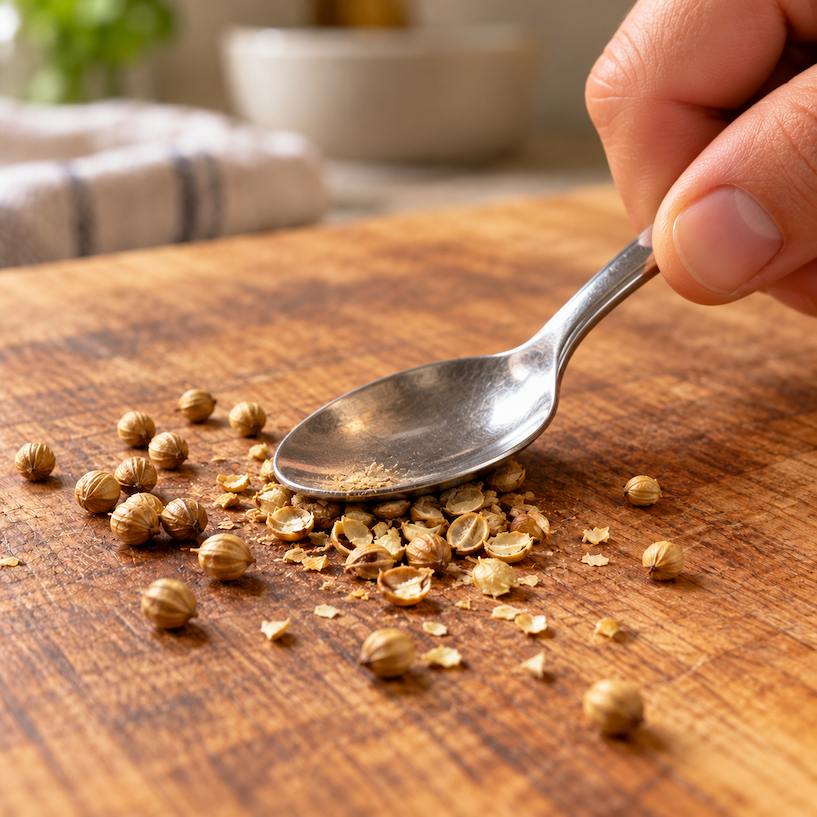
Put a few coriander seeds on a cutting board. Press down with the back of the spoon until they crack.
Bring them close and take a gentle sniff.
What do you notice?
If you’ve been experimenting along with us, we started with the Two-Pan Test, exploring what happens when cumin meets warm oil. Then we took the oil away and tried dry-toasting those same seeds.
Missed either one? You can catch up whenever you like. Today, we’re changing something else: the size of the spice.
And we’re inviting coriander into the kitchen.
Meet cumin’s citrusy neighbor
Coriander seeds bring a warm, gently citrusy flavor to food.
If “coriander” makes you think of cilantro, there’s a connection. The seeds and leafy herb come from the same plant, but they taste different.
For this experiment, we’re working with the seeds.
Whole. Crushed. Ground.
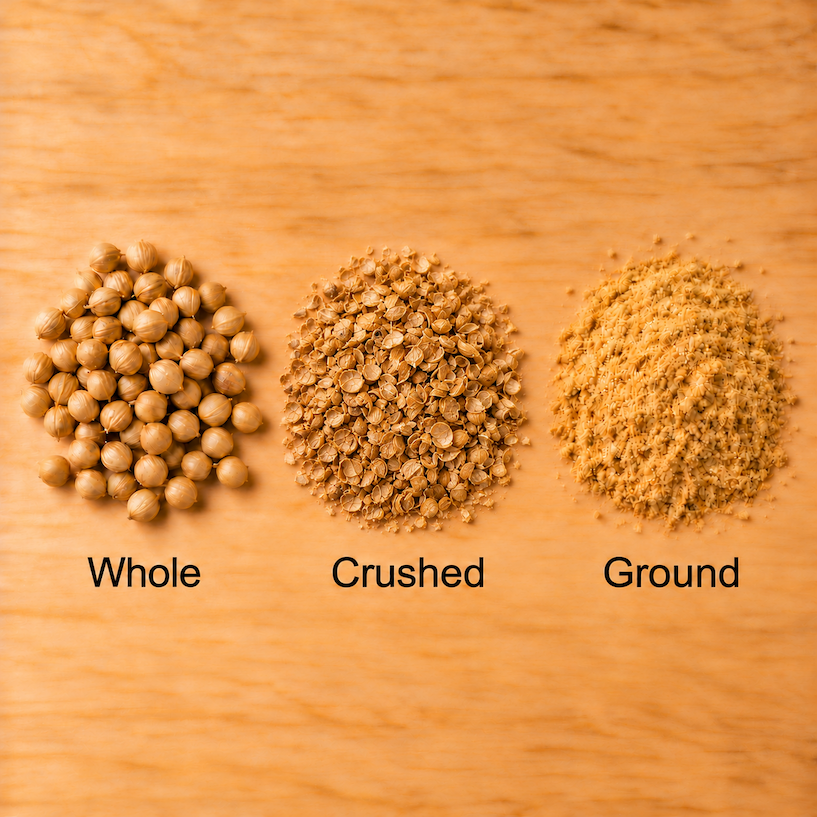
You don’t have to take a whole spice all the way to powder.
Whole seeds stay recognizable in the dish. They’re useful when you want to steep a spice in a broth or include it in a pickling mixture.
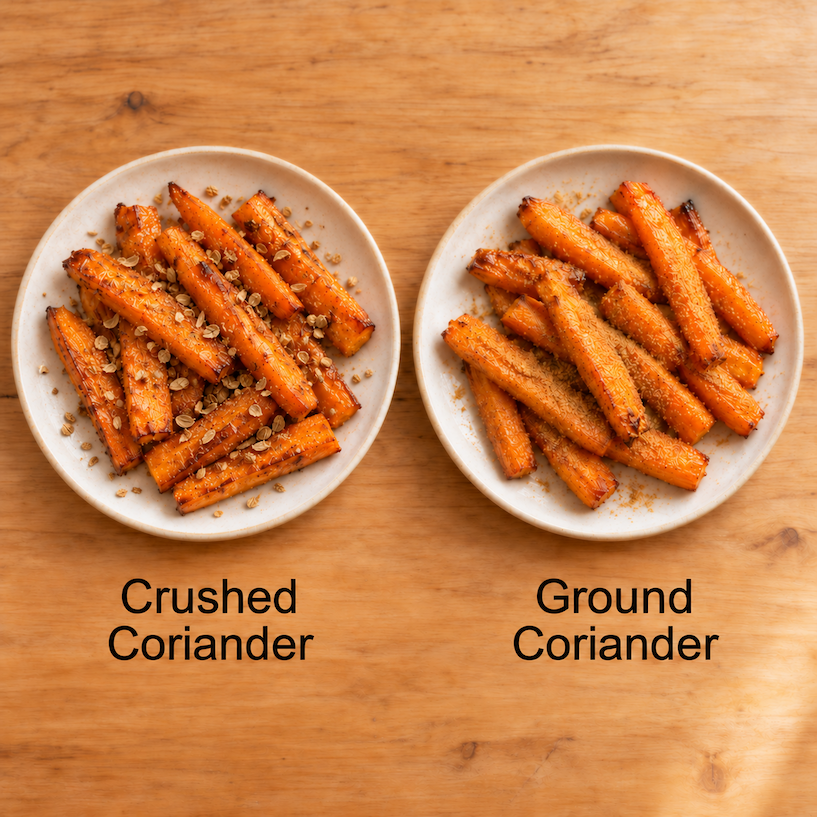
Lightly crushed seeds leave small pieces that become part of the texture. Try them on roasted vegetables, where you can notice the seasoning from bite to bite.
Finely ground seeds mix more evenly into a rub, sauce, or dressing, without leaving noticeable seed pieces.
The question is: How do you want the spice to show up in your food?
Try it with your next tray of carrots
Cut about one pound of carrots into similar-sized pieces. Toss with a tablespoon of olive oil and salt to taste.
Divide the carrots between two bowls.
Measure ½ teaspoon of whole coriander seeds for each bowl. Lightly crush one portion. Grind the other finely.
Toss each portion of coriander with its own bowl of carrots, then spread the carrots on separate sides of a baking sheet.
Roast at 400°F until tender and browned, about 25–35 minutes depending on the size of the pieces. Turn halfway through.
Taste a carrot from each side.
Notice the texture. Does one feel more evenly seasoned? Do you enjoy the little pieces of crushed coriander in the other?
There doesn’t have to be a winner. You’re learning which version you’d choose for dinner.
One more choice in your spice cabinet
First we explored oil. Then dry heat. Now texture.
You can choose how much to break a seed, just as you can choose how to heat it.
Next time you reach for a whole spice, pause before grinding. A few gentle cracks might be all your dish needs.