
What happens when you take the oil away?
Last time, we changed one small thing about the way cumin went into the pan.
And you could smell the difference before you tasted it.
So we started wondering:
What happens if you take the oil away completely?
Same cumin seeds.
Same heat.
But this time, nothing between the cumin and the pan.
And here’s where it gets interesting.
At first, almost nothing seems to happen.
Then the smell changes.
Warmer.
Toastier.
A little nuttier.
The same cumin you already know starts smelling noticeably different — without adding a single other ingredient.
That’s the experiment we want you to try this time.
Missed our first cumin experiment? Catch up here.
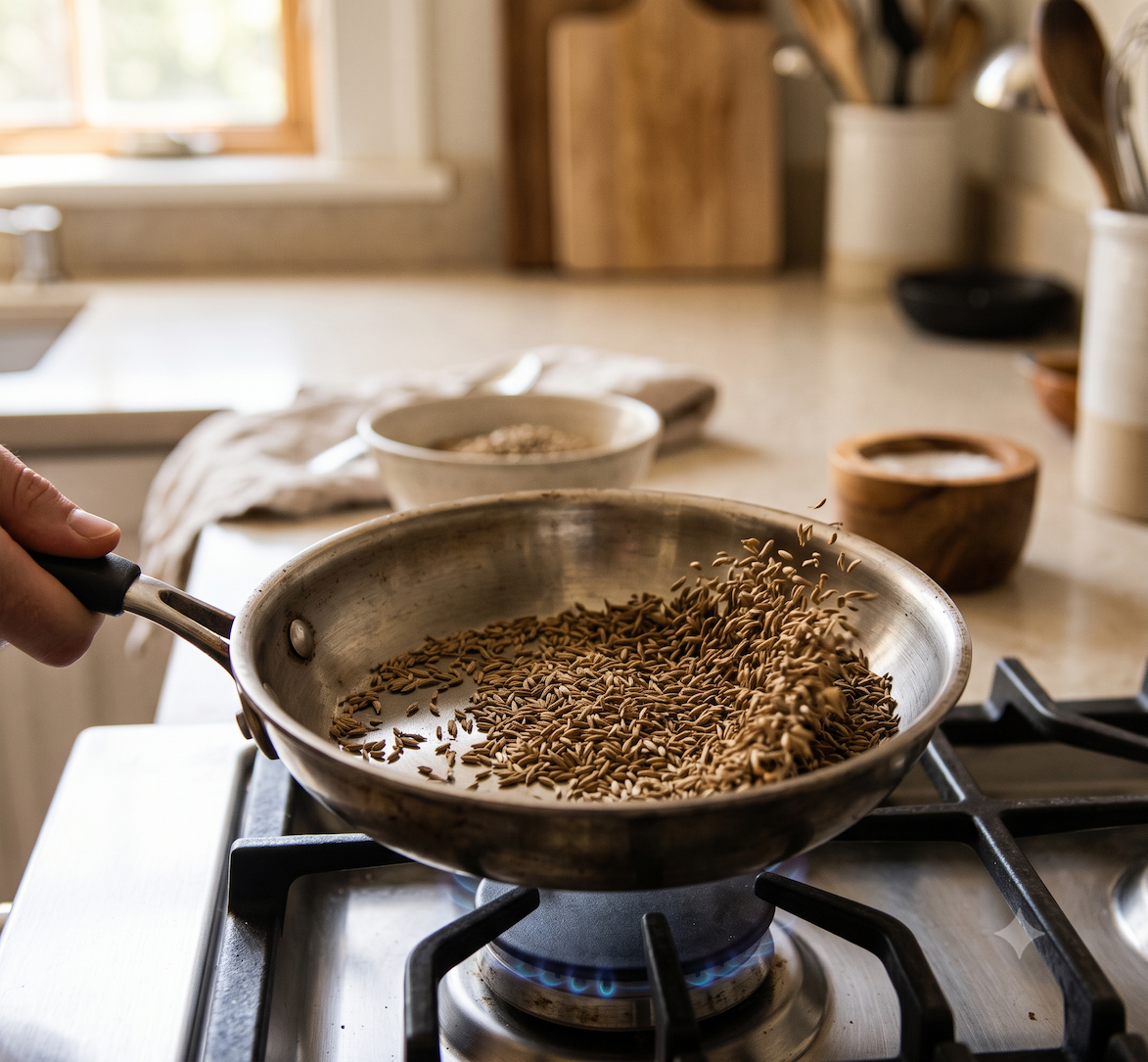
Take a small dry skillet.
Add some whole cumin seeds.
Nothing else.
No oil.
No ghee.
Just cumin and heat.
At first, almost nothing happens.
Then the smell starts to change.
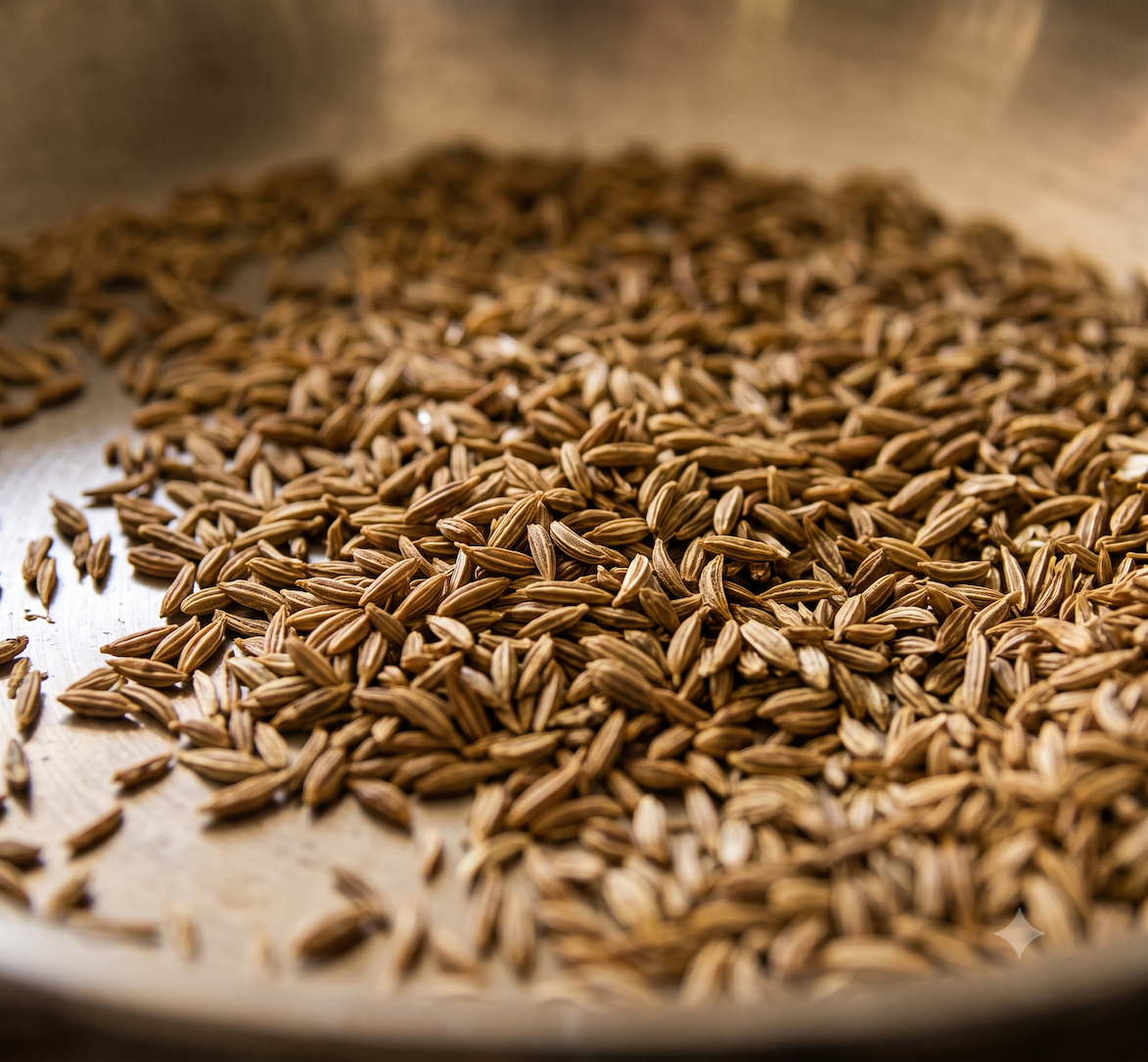
The aroma gets warmer. Toastier. A little nuttier. That sharper smell of the raw seed starts giving way to something deeper and rounder.
That’s the moment you’re looking for.
Don’t wait for the cumin seeds to become dramatically darker.
Once the aroma clearly changes and the seeds have deepened slightly in color, take them off the heat and tip them onto a plate.
The hot pan will keep cooking them even after the burner is off.
So how is this different from last time?
Last time, cumin met warm fat.
Blooming helps cumin’s aroma move into the oil or ghee, which then carries that flavor through the dish.
This time, we’re changing the seed itself before it goes anywhere near the rest of the food.
Same spice. Different treatment. Different result.
And it brings us back to something we said last time:
Maybe you don’t need more spice. Maybe you need more from the spice you already have.
Sometimes that means blooming it.
Sometimes it means toasting it first.
Try this little comparison
You don’t even need to cook a recipe.
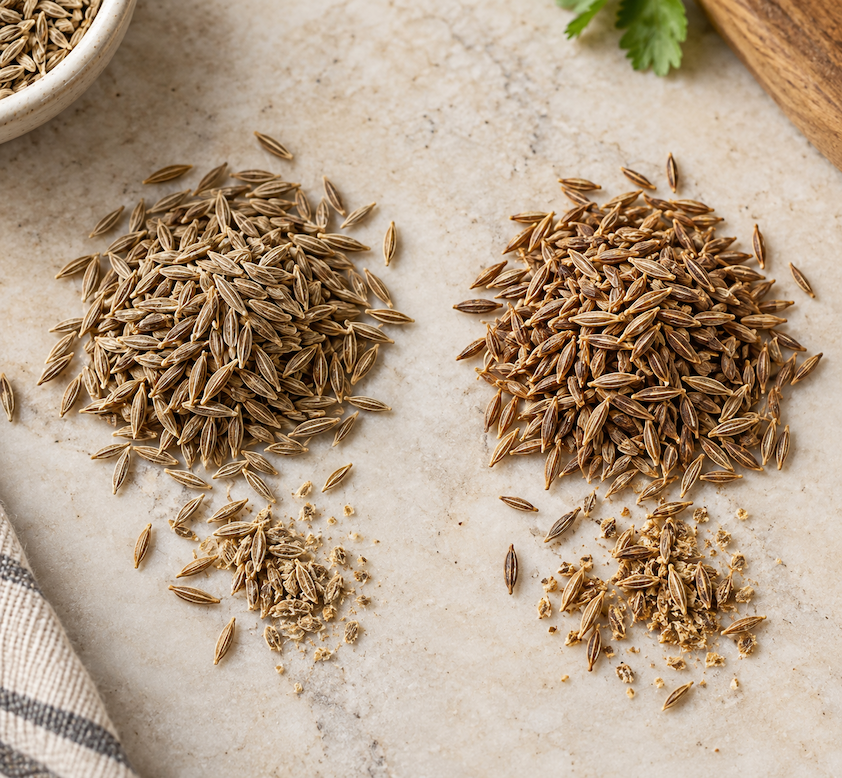
Take about a teaspoon of whole cumin seeds and divide it in two.
Leave one half alone.
Toast the other half gently in a dry skillet, stirring or shaking the pan so the seeds heat evenly.
As soon as the aroma turns noticeably warmer and more roasted, transfer the seeds to a plate and let them cool.
Then crush a few seeds from each pile between your fingers or with the back of a spoon.
Smell the untoasted cumin first.
Then smell the toasted cumin.
That’s the whole experiment.
No recipe to follow. No “correct” answer.
Just notice what changed.
You can even taste a tiny pinch of each.
Which one feels warmer? Which seems deeper? Does one linger a little longer?
Once you know that smell...
You start noticing where you might want it.
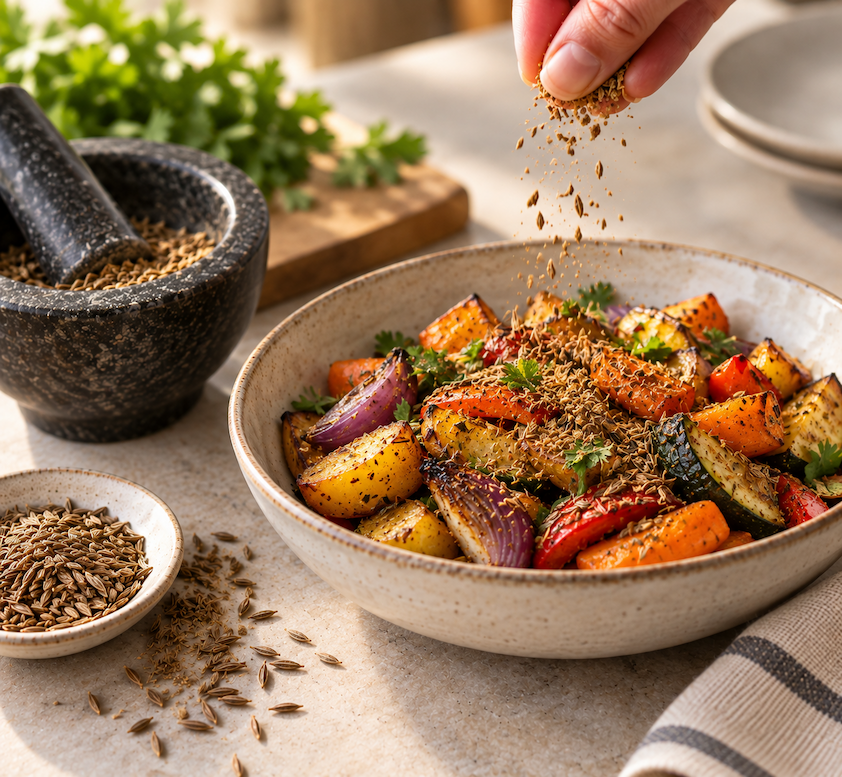
Try crushing a little toasted cumin over yogurt or raita, stirring it into beans or lentils, or sprinkling it over roasted vegetables.
You can also toast the seeds, let them cool, and grind them afterward.
The important part isn’t watching the clock.
Your nose is often a better timer.
Same cumin.
One small change.
And suddenly, you notice something in that familiar spice that you hadn’t before.
That’s why we love these little experiments.
They make familiar spices feel new again.